Monday, October 18, 2010

Mysticism

I was highly sceptical going into this weeks lecture.
Mysticism is not something I necesarily believe links religion, visions, out of body experiences and internal suffering together. I think of these phenomenons as being rather different. Regardless, for purposes of this course let us assume that they could be.
Before this lecture I couldn't quite explain how religion exists and the existance of mysticism certainly helps. I always thought religion was a set of rules and principles that had been tried and tested, then put into a book in order to keep humans living safely and harmoniously alongside eachother. The law enforcement part comes from the constant threat of sin and going to hell.
Another is that the origins of Religion came from mystics, which could very well be considered schizophrenic if they were alive today. Is this a failure of modern science or a misdiagnosis/misunderstanding of mysticism? I'm not entirely sure.

It takes all types to make up the world, I would not wish for mystics not to exist.
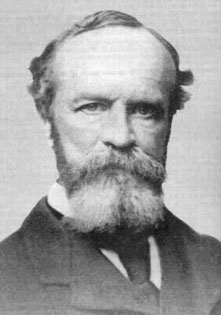

William James wrote a book called Varieties in which he talks about mysticism. They seem to be the epitome of democracy, the type of person democracy wishes to produce; someone rational, detached and just.
"subjects are passive with respect to them (mystical experiences): they cannot control their coming and going. Are these states, James ends the chapter by asking, “windows through which the mind looks out upon a more extensive and inclusive world[?]” (V, 428)." http://plato.stanford.edu/entries/james/#5 ( Under the heading '6. The Varieties of Religious Experience)

I would have to say they are. If they truly exist and are a passive experience, letting people view a situation outside their own bodies reflectively, then I think they are important for human development. This sounds like something politicians strive to do their entire lives; to step back from situations and view them in this way.
If someone has the power to do this naturally, then all power should be given to them, what CAN'T be proved is whether they are telling the truth or not.

It seems that mysticism links all religion and schools of thought together as well. Every religion has a fictitous, unprovable component to it that goes against modern science. Two schools of mysticism seemed to create most Eastern and Western religions as well. In this blog post, Taylor Marshall explains that fundamentally different mysticism, Christocentric and Theocentric were adopted by east and west, making their religions based on the same thing yet slightly different. the West was concerned with  humility and the Blessed mother, the east with divine essences and divine energies.


Left: The Fundamental of Jewish Mysticism: http://www.jlcsouthflorida.com/userfiles/image/mysticism.jpg
We saw this type of mysticism in Master Liu workshops last term, talking about the Qi (energy) that flows through the body. This is just as abstract an idea as the existance of a blessed mother. Each person that is brought up within these religions usually accepts them having had no mystic experience of their own.

If this mystical experience happens OUTSIDE the realm of that persons beliefs, then they would consider themselves to be going mad (shizophrenic) and if it is outside the realms of doctors, which it usually is, this causes them to be diagnosed as such.

This sort of unexplained inspiration comes out in so many ways. Through music, poetry, writing, performance of any kind really. It is only explained as 'inspiration'. But where does it come from? it is not tangible. It cannot be explained rationally.

Someone like Frida Kahlo is a perfect example of a suffering mystic who made her own reality. From the readings (Diaries, Journals and Self Image) we can deduce that her diary was paradoxical (p. 24) as mysticism often is, she experienced 'first hand sensations transcribed and recorded'(p 25) and as we all know mysticism is a personal, non transferrable experience. Her suffering, her visions and her diary are a testiment to mysticism existing.

Picture one: http://farm1.static.flickr.com/69/212056753_ac1956e57e_m.jpg
William James: http://www.nndb.com/people/569/000087308/william-james-3-sized.jpg

Frida Kahlo:
http://www.linesandcolors.com/images/2007-06/kahlo_387.jpg

Thursday, October 7, 2010

The world through the eyes of film.

I often think of film and later television as meditations upon society or human interaction. They reflect a more dramatic, stereotypical version of everyday individuals that thus become a character.
In most part, they are faithful to the era they are created in, reflecting society more or less how it was at the time, which makes them greatly valuable historically and educationally.
Before film there was only music, photography and fine art, which leave room for interpretation a lot more so; the viewer must actively engage with it and assume most of its meaning.

Film had been experimented with at large for quite some time but it wasn't until the Lumiere brothers that it really got off the ground. They invented a Cinematographe that allowed film to be shot, stored and played all on the one machine. This is when audiences were finally involved in the cinema phenomenon for the first time.

Image from : http://sonandfoe.com/wp-content/uploads/2007/08/early-lumiere-brothers-film-poster.jpg

Around this time and before integrated sound, the 'Cinema of Attractions' was in full force. 
In order to portray meaning without sound, visual attraction was used to entice an audience, in the films of Charlie Chaplin among others. It was exhibitionist, over the top, straight forward and above all easy to understand (Gunnings 2).

The effect of cinema on the body was a social, pleasurable experience. It united people together in one room and gave them common knowledge to talk about. Through Edison's films gender equality started to occur; men could view women and women could view male bodies. Pornography was the most popular type of film between 1895-1900 (showing an ankle was considered pornographic). It allowed people to travel further than their physical realm would allow; television and film is an extension of the eye and the ear according to Marshall McLuhan.
They become a great historical text in some ways; what we notice in these films differs from what people thought at the time. By being a part of a technologically soaked generation, we tend to look ignorantly upon these films and deem them unexciting or over-acted as opposed to ground breaking and risque.
"Cinema is a way of presenting a series of views to an audience" according to Gunnings (1). This reflects how views change over time, because historically different audiences experience the same film drastically differently.

People were able to learn about themselves and the world they lived in by being detached from the subjects and becoming the voyeur. Marey allowed humans to learn more through art than science with his high speed photography; proving scientific truths that the human eye was too slow to see. 

Pole Vault by Marey: http://www.lumen.nu/rekveld/wp/wp-content/uploads/2007/04/marey188.jpg


They also had to understand the logistics of moving cameras in their normal space; understanding that any action they do can obscure other peoples vision and can be kept forever.

Screen Worlds. 


Image from: http://www.acmi.net.au/screen_worlds.aspx

Screen Worlds at ACMI, Federation Square encapsulates the history of film and the moving image from photography, to cinema, to television, to the digital realm. Along each step of the way, thanks to technological advancements, films increased in number of production and available audience until that audience number became infinite once it reached the Internet. 


Bibliography:

 Gunnings, T. accessed 9th October 2010,

Monday, September 13, 2010

Epigenetics

This is obviously a DNA strand. We can find one of these in every nucleus of every cell in our body. The two colours are amino acids that come together to form a unique code of DNA for every human being. Epigenomes are essentially above the genomes. they are above the DNA and program/activate DNA, ordering it to carry out tasks, e.g. to move an arm or a leg or to recreate cells. When epigenomes don't work properly, cells do not do what they are supposed to do. Epigenetics in essence controls the expression of your genes/DNA. Through lifestyle factors such as smoking, drinking, excersise, epigenomes can be altered and can control human evolution.

It is interesting to see the body from a scientific point of view and realise that every chemical we put into our body, every lifestyle choice we make is actually affecting these epigenomes. In turn, these epigenomes are affecting the very fabric of our existance and altering our life expectancy, health, fitness, etc.

One thing to remember is that your outcomes are dependant on what your a predisposed to (what your DNA is capable of) and ALSO by what choices you make in your lifestyle ( your epigenetics).

The Human Genome Project has been extended to become the Human Epigenome Project, as seen in this highly informative video.


As well as the obvious threats to our health like smoking, there are less obvious ones like using mobile phones, microwaves, unknowingly eating thousands of chemicals on the skin of food from the supermarket; all of these chemicals could have the potential to alter your epigenomes and thus alter how your DNA expresses itself over a lifetime.

The exciting news for cancer patients is that epigenomic therapy could eradicate chemotherapy and radiation therapy for good. Instead of attacking good and bad cells and pumping in radiation that disperses itself during cell division, epigenomic therapy sends new signals to your DNA that reprograms defective cells into diving at a normal rate, thus fixing the route of the problem and not causing more harm than necessary.

The malleability of epigenomes has been found in identical twins, whereby when they are young their epigenomes are inherently identical. As they get older and choose different life paths, their epigenomes differentiate.

Much like genes and DNA, epigenomes are passed down over generations, which is why your lifestyle choices can affect your children moreso than they affected you while you were alive.


Epigenomes are also linked to certain neurons in our brain. As Ramachandran on Ted.com explains, there may be a scientific explanation for the inexplicable, spiritual link between human beings. He calls it the ‘Gandhi’ neuron or the ‘empathy’ neuron.

Apparently, when you pick up an apple, a neuron fires in your brain. If you watch someone else do it, the same neuron fires. If you have an amputated arm, you will feel the sensation of picking up an apple through observation. This is also why if you see another person cry or their eyes water, yours start to water instantly.

This also explains how skills were passed on horizontally throughout a population and then vertically across generations. People watched and emulated making fires, they listened to music and were able to play it, and they listened to language and were able to speak. It is still happening today.


This explains why the flow of Qi (Master Liu) is not confined to only one person’s body. It can flow throughout your body and into another quite easily. This explains how we can read the mood of another person instantly.


There can never be individual brains, they are all interconnected through neuron activity.

What is equally exciting is that this neuron activity is not fixed, it changes constantly.

And it has even more medical applications


Positive Thinking- what was once a spiritual concept now has scientific and medical explanation/application.

Positive thinking can be transferred from one body to another through the interneuron connection that exists between all people. This positive thinking which is essentially an environmental experience then affects our epigenomes, that program our DNA to heal and carry out certain tasks. Take the placebo effect as an example. We see a tablet, believe it to work, those neural impulses travel to our epigenome, our DNA is programmed to heal our body and then we get better.

Mind Over Matter


Just as your epigenome controls the expression of disease — your mind controls your epigenome. Therefore, your mind controls your healing. The science of epigenetics is now beginning to explain things like placebo effect and spontaneous healing, which lacked a scientific basis until now. Epigenetics literally means “above the genes.” And what is above the genes? Your mind!


One of the scientists on the forefront of mind-body biology is Bruce Lipton. Thanks to Dr. Lipton and other leading voices, the power of your mind is finally gaining the attention it deserves. Your mind has the power to create or cure disease because your thoughts affect the expression of your genes. Today’s “New Biology” is overlapping with consciousness science and quantum physics, and it’s showing us that we have masterful control over our own lives.


Body Image

In reference to BIID from last week, as a group we decided that there may be cultural elements involved in its formation.
Given that the emergence of BIID was out of the U.S. in predominantly male cases, the explanation for this was that people were identifying positively with amputee war victims, who were also predominantly male. Admiring the attention that these victims received, copycatting the physical appearance of these soldiers occured.
The same could be said in the 21st century of young women and men. Succesfful, affluent and filthy rich movie stars are successful and subsequently either ridiculously thin (women) or overly muscular (men) due to the scrutiny and pressure they are subjected to.
As a result, the rest of society looks to these icons and aims to copycat their appearance in order to emulate the same success as their favourite stars. this relates very much so to the Sobchack article we were reading this week.

As in this case, people focuse too much on their exterior, their outside, performative success (p. 186) and therefore become more detached from their visual image of themselves.
They get caught up in Iconomachy (of moviestars for example, or war veterans) and reject their current visual representation as acceptable. Meanings are produced from visual representation and this can not be ignored, but it must be remembered that human beings transcend and subtend the images that they produce. There is more so someone than their visual or virtual (facebook) representation.
the pictures of amputees or celebrities become aesthetic, iconic and not clinical as they were intended.

This article "Is Any Body Home?" helped me understand the underlying factors of body image disorders and how people can slowly dissasociate from their physical image. More and more so, we live in a visual culture where appearances do matter regardless of what any self help author may tell you.

You can either create you image according to God and serve him, altough I'd rather not, or through your visual appearance. it is important for your self confidence, your self awareness and even your success in a career. Body image says 'something true about your personality' and is often manipulated frantically on a monday morning before work in order to instantly portray professionalism.


Unfortunately, assumptions will always be made about your personality, self esteem, motivation, likes, dislikes etc purely on your visual appearance. 


Somthing characteristic of body disphorphic disorder, BIID and body image disorders is that our subjective imagining or ouselves and our objective imagining of ourselves can be vastly different (p. 170) As seen in this cartoon, someone suffering from anorexia will think they look fine in person but in a mirror or from the perspective of others they will be terribly unhappy with their appearance.

The most important thing to remember is that all these extreme versions of dysmorphia are changeable. They arise out of the misconception that the body is a fixed entity; people want their bodies to look a certain way of for it to stay the same. They must accept that the body is a malleable substance that is subject to constant change and influence from the environment around it (p. 203).

Bibliography : Sobchack, V. Carnal Thoughts: Embodiment and Moving Image Culture, Berkeley: University of Californica Press, 2004, 170-203.

Friday, September 10, 2010

Body Image Disorders


From maths to image disorders. Quite a transition in under a week.
This week we talked about Body Integrity Identity Disorder. 
-          A neurological disorder- The desire to have one or more limbs amputated to match the internal identity. 
 Some overlap exists between this disease and other body image disorders such as anorexia and body dismorphic disorder.  
The difference between a normal amputee and someone with BIID is that the former feels as if the limb is still there; the latter does not feel that anything is missing. They actually feel that their body is whole WITHOUT the limb, which is a thoroughly bizarre concept.
They do not feel diabled, embarrassed, or ashamed, but rather see is as an improvement of their appearance. Some people are even more excited by a partner with an amputation (Acrotomophile) or just plain love amputation (Apotemnophilia).

So what causes all this seemingly abnormal, insane behaviour? As usual, noone is entirely sure. It could stem from a neurological disorder that has been misdiagnosed, it could be a Freudian external result of an internal conflict, it could be an outcry for love and affection or they could be modelling behaviour form something seen as a child (war victims or relatives, helps them to perceive it as normal). 
Either way, all are deeply embedded psychological causes to do with the brain influencing the body and compelling it to amputate for one reason or another. 

This mental ongoing has mixed ramifications on sufferers (who don't actually consiously think they even suffer post amputation).
There are pretenders- people who pretend to be disabled but aren't. Or there are Transablers- people wanting to have a disease so that they amputate.
The internet is said to help the disease along by giving people more access to information, methods and images. Some methods are self inflicted unfortunately, which disguises the actual disease as a mere accident; a gun shot wound, using dry ice, lying on train tracks etc. It can be misdiagnosed as depression quite often.  Antipsychotic drugs are then prescribed but seldom quash the desire.
-          More men than women have this disorder. Possibly because of male dominated war zone and involutntary amputation and subsequent heroism.civil war.Women want more severe amputations done. 

The BIG issue-
amputation or no amputation?
If this is a legitimate disease i feel no reason for people not to amputate. If they are unhappy and feeling tormented by an extra limb, and their life will improve post amputation, i see no reason to question their motives. It is like telling someone that they cannot commit suicide. If a person is unhappy in their physical body they should be allowed to augment or to leave it as long as they do not pose risk or threat to any other human being.


Sights and Sounds Exhibition


Image From: http://www.theartscentre.com.au/discover/exhibitions-forums-talks-and-tours.aspx

 In this exhibition we looked at works that had been created whilst listening to a certain type of music or had been matched to music after creation. It was successful fusion of two creative outlets that felt more interactive than your usual exhibition. It went beyond the material limits of art and extended into the room around us, bringing together traditionally respected visual art with the newest form of art, music. It got rid of the hierarchy that exists in creative arts. Art was interpreted as an enduring expression that lasts longer than ourselves, art can be duplicated, music can be handed down.

We got to observe how our body responded to the music, how our mood was shaped by the sound and then expressed in a visual form. The body is then affected again as a voyeur; although not all reactions to art are the same they can be fairly similar if we are told how to feel by the tone of the music, thus by the artist who has made the work. It is an interesting philosophy. Work by John Aslanidis (above) certainly made others and myself quite nauseous when we subjected to its psychedelic, hypnotic visuals whilst listening to frantic, disorganised sound. The experience was similar to watching television or films. Through the use of images and sounds that relate to each other, the body can be affected and an emotion can be extracted from the viewer e.g. horror films- fear, comedies- laughter, romantic comedies- self pity and idolisation.

The Body and Maths


A quick reflection of Sean Cubitt and the body as a machine.
Sean did focus quite heavily on the negative impact that industrialisation has had on our physical selves. He had a quite Marxist approach to labour, working, the distribution of capital and the free market.


The positives that he seemed to overlook were how free markets and unreliability of employment has broadened peoples skill sets. Our generation is predicted to have a number of career changes and I dont see this as a negative at all. The more skills, the less boredom.
He also said that our bodies will not ever be able to live without machines. It is true, a little scary, but quite exciting. I love machines. Gadgets. Technology and machines along with science and western medicine have lengthened our life span and made us more productive. This ties in with how Stelarc saw machines as an extension of our body, an assistance to our limited capabilities. We are in a sense slaves to machines, always having to use them a certain way, repeating movements etc, but we hold the creating license to innovate them in order to make them better. And are they not slaves to us at the same time? programmed to do what we want?
The question is posed however, in many a sci-fi film; what happens when technology goes wrong? when human programmed robots attack our bodies instead of protecting them? This is where the Eastern thinking of Master Liu would chime in and say that the body can exist harmoniously without machines and often needs time away from them.
I must conclude that technology is an unavoidable means to an end. We need laptops, mobiles and the internet to survive globalised, capitalist society, but we also need to get away from them from time to time.

MATHS

Greg Hjorth presented the idea that pure mathematical theory is permanent, certain, immediate and precise.  It came from (rightly or wrongly decided) the Ancient Greeks. It came hand in hand with religion. Mathematicians were also deeply religious. Maybe this is why maths caught on so much, people before, people were natually compelled to believe in certain things; religion, maths, philosophical ideas.
Now we are much more free, religion is less common, yet maths is still an unquestionable constant. Were people less critical? less questioning? is it not time for a review of mathematics?

He aimed to highlight that althogh Mathematics has been created by the human brain and thus body, once it exists, it is more permanent, more correct, more unquestionable than our bodies. It is MORE of a machine than our bodies are claimed to be, because the theory, time and time again, will always work. Maths is thus a machine that always generates the right answer as long as you play by its rules.


In a world filled with human error where circles are never quite round, mathematics is a reliable procedure whereby if the rules are followed, the answer will always be correct; the circle always round. 


This is where the frustration lies whenever i try to interact with mathematics. all the faults are found in the human error and not in the theory, when, as an arts student, you wish and are told to challenge theory constantly. Your questioning and human error could one day prove to be philosophically profound.
Whereas maths is philosophy applied to numbers and NEVER REVISED. Unlike the body which is constantly revising and bettering itself through evolution, maths is this rigid structure that is for some reason, unchangeable.

Some parts of our body are unchangeable though. From the minute we are born we will look a certain way unless we happen to be in an accident. We are usually symmetrical, we usually have two of everything. So I guess maths can be applied to the understanding of our physical selves in some instances. And it does unite the world in an unprejudiced way, accross cultures, it is a shared cultural artefact.