Tuesday, October 19, 2010

Law needs us, Law controls us and Law makes us.


The lecture received 18-10-2010 by us students from Connel Parsley was arguably one of best in the entire series.
Explaining the foundations of law and its interrelations with the human body to arts students with no previous knowledge of law is a feat in itself.
This is what I have deduced from Monday.

The creation of law as we know it today was based upon Habeas Corpus which arose out of the Magna Carta; which stipulates that all humans have rights. They have rights to stand trial, there is a presumption of innocence and whatever outcome may occur at a trial, the person must adhere to this conclusion (Swiss et al 43). The law needs bodies in which to act through; otherwise it is merely an inhuman abstract idea floating around and not pinned down. Bodies are also evidence; they substantiate legal claims.
Fundamentally, human bodies need law in order to protect themselves and others from injustices. Politics is what gives rise to the creation of law; the governance of a mass of bodies needs both and they are inextricably linked. So, in a natural state of affairs (political philosopher Thomas Hobbes calls this the ‘State of Nature’) is an undesirable position to be in. People are constantly fighting for limited resources and will show disregard for others; being naturally selfish.

Further information: http://plato.stanford.edu/entries/hobbes-moral/#StaNatStaWar
This is why law is integral to human existence. But it does have its flaws. The court system and the emphasis on trials were meant to replace brutality that was entertaining; sovereignty if you will. The time of sovereignty relates to monarchies, hierarchical systems of governments, kings and queens. This was power of one body exercised over others; the power of life and death, the threat of execution was how law was enforced.

Now in an age of bio-politics (statistical management of populations by democratic government) trials replace brutality....most of the time. Guantanamo bay is one of many failures. The successes are how the spread of disease, immigrants, car crashes, crime and other threats are managed. If these exceed a certain percentage, then governments will usually act to minimise the threat.
So where does this progression lead for the human race?
If we choose to abide by law, it will produce us in a certain way as law abiding citizens of a nation state. If we choose not to and are persecuted, it will still produce us in a certain way by controlling our movements, identity, behaviour etc.

Mr. Parsley made a great point when he said “Law, just like other disciplines is imaginative”. You can’t reach out and touch law; it is merely an idea that we have created that seems to benefit the majority of bodies. Many people abide by law and govern their bodies by national or international, spoken or unspoken laws.
Poetics of the body are essentially different ways of looking and understanding the body which we have discussed in this subject. Law is merely one way of looking at the body; one philosophy to comprehend.

Bibliography
Swiss, Thomas and Andrew Herman (2000) The World Wide Web and contemporary
cultural theory. Routledge: New York.


Monday, October 18, 2010

Mysticism

I was highly sceptical going into this weeks lecture.
Mysticism is not something I necesarily believe links religion, visions, out of body experiences and internal suffering together. I think of these phenomenons as being rather different. Regardless, for purposes of this course let us assume that they could be.
Before this lecture I couldn't quite explain how religion exists and the existance of mysticism certainly helps. I always thought religion was a set of rules and principles that had been tried and tested, then put into a book in order to keep humans living safely and harmoniously alongside eachother. The law enforcement part comes from the constant threat of sin and going to hell.
Another is that the origins of Religion came from mystics, which could very well be considered schizophrenic if they were alive today. Is this a failure of modern science or a misdiagnosis/misunderstanding of mysticism? I'm not entirely sure.

It takes all types to make up the world, I would not wish for mystics not to exist.


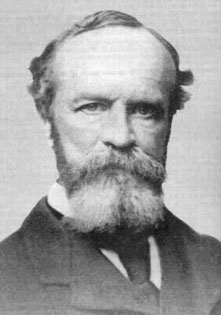
William James wrote a book called Varieties in which he talks about mysticism. They seem to be the epitome of democracy, the type of person democracy wishes to produce; someone rational, detached and just.
"subjects are passive with respect to them (mystical experiences): they cannot control their coming and going. Are these states, James ends the chapter by asking, “windows through which the mind looks out upon a more extensive and inclusive world[?]” (V, 428)." http://plato.stanford.edu/entries/james/#5 ( Under the heading '6. The Varieties of Religious Experience)

I would have to say they are. If they truly exist and are a passive experience, letting people view a situation outside their own bodies reflectively, then I think they are important for human development. This sounds like something politicians strive to do their entire lives; to step back from situations and view them in this way.
If someone has the power to do this naturally, then all power should be given to them, what CAN'T be proved is whether they are telling the truth or not.

It seems that mysticism links all religion and schools of thought together as well. Every religion has a fictitous, unprovable component to it that goes against modern science. Two schools of mysticism seemed to create most Eastern and Western religions as well. In this blog post, Taylor Marshall explains that fundamentally different mysticism, Christocentric and Theocentric were adopted by east and west, making their religions based on the same thing yet slightly different. the West was concerned with  humility and the Blessed mother, the east with divine essences and divine energies.


Left: The Fundamental of Jewish Mysticism: http://www.jlcsouthflorida.com/userfiles/image/mysticism.jpg
We saw this type of mysticism in Master Liu workshops last term, talking about the Qi (energy) that flows through the body. This is just as abstract an idea as the existance of a blessed mother. Each person that is brought up within these religions usually accepts them having had no mystic experience of their own.

If this mystical experience happens OUTSIDE the realm of that persons beliefs, then they would consider themselves to be going mad (shizophrenic) and if it is outside the realms of doctors, which it usually is, this causes them to be diagnosed as such.

This sort of unexplained inspiration comes out in so many ways. Through music, poetry, writing, performance of any kind really. It is only explained as 'inspiration'. But where does it come from? it is not tangible. It cannot be explained rationally.

Someone like Frida Kahlo is a perfect example of a suffering mystic who made her own reality. From the readings (Diaries, Journals and Self Image) we can deduce that her diary was paradoxical (p. 24) as mysticism often is, she experienced 'first hand sensations transcribed and recorded'(p 25) and as we all know mysticism is a personal, non transferrable experience. Her suffering, her visions and her diary are a testiment to mysticism existing.

Picture one: http://farm1.static.flickr.com/69/212056753_ac1956e57e_m.jpg
William James: http://www.nndb.com/people/569/000087308/william-james-3-sized.jpg

Frida Kahlo:
http://www.linesandcolors.com/images/2007-06/kahlo_387.jpg

Thursday, October 7, 2010

The world through the eyes of film.

I often think of film and later television as meditations upon society or human interaction. They reflect a more dramatic, stereotypical version of everyday individuals that thus become a character.
In most part, they are faithful to the era they are created in, reflecting society more or less how it was at the time, which makes them greatly valuable historically and educationally.
Before film there was only music, photography and fine art, which leave room for interpretation a lot more so; the viewer must actively engage with it and assume most of its meaning.

Film had been experimented with at large for quite some time but it wasn't until the Lumiere brothers that it really got off the ground. They invented a Cinematographe that allowed film to be shot, stored and played all on the one machine. This is when audiences were finally involved in the cinema phenomenon for the first time.

Image from : http://sonandfoe.com/wp-content/uploads/2007/08/early-lumiere-brothers-film-poster.jpg

Around this time and before integrated sound, the 'Cinema of Attractions' was in full force. 
In order to portray meaning without sound, visual attraction was used to entice an audience, in the films of Charlie Chaplin among others. It was exhibitionist, over the top, straight forward and above all easy to understand (Gunnings 2).

The effect of cinema on the body was a social, pleasurable experience. It united people together in one room and gave them common knowledge to talk about. Through Edison's films gender equality started to occur; men could view women and women could view male bodies. Pornography was the most popular type of film between 1895-1900 (showing an ankle was considered pornographic). It allowed people to travel further than their physical realm would allow; television and film is an extension of the eye and the ear according to Marshall McLuhan.
They become a great historical text in some ways; what we notice in these films differs from what people thought at the time. By being a part of a technologically soaked generation, we tend to look ignorantly upon these films and deem them unexciting or over-acted as opposed to ground breaking and risque.
"Cinema is a way of presenting a series of views to an audience" according to Gunnings (1). This reflects how views change over time, because historically different audiences experience the same film drastically differently.

People were able to learn about themselves and the world they lived in by being detached from the subjects and becoming the voyeur. Marey allowed humans to learn more through art than science with his high speed photography; proving scientific truths that the human eye was too slow to see. 

Pole Vault by Marey: http://www.lumen.nu/rekveld/wp/wp-content/uploads/2007/04/marey188.jpg


They also had to understand the logistics of moving cameras in their normal space; understanding that any action they do can obscure other peoples vision and can be kept forever.

Screen Worlds. 


Image from: http://www.acmi.net.au/screen_worlds.aspx

Screen Worlds at ACMI, Federation Square encapsulates the history of film and the moving image from photography, to cinema, to television, to the digital realm. Along each step of the way, thanks to technological advancements, films increased in number of production and available audience until that audience number became infinite once it reached the Internet. 


Bibliography:

 Gunnings, T. accessed 9th October 2010,